

A ceramic ball with an opening should be identified by its process function rather than grouped automatically with grinding media. Perforated ceramic products may be proposed for support or packing arrangements, where the opening and bed configuration are part of the application. For a Sanxin inquiry, state the intended role and require an explicit feasibility response. A general ceramics listing does not establish a qualified chemical-process offering.
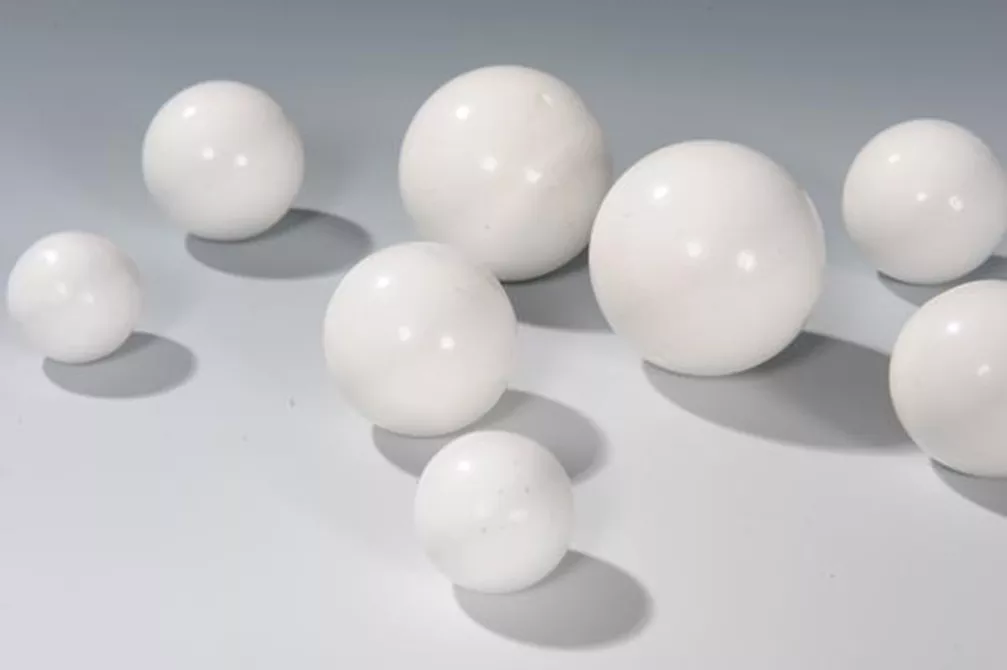
Provide the equipment and process context, including whether the proposed material supports another bed, forms a covering region or serves another defined packing role. The responsible process designer should specify that function. A photograph of a perforated sphere cannot establish the accepted loading or arrangement inside the equipment.
Record the material placed above, below and alongside the proposed layer where relevant. Those interfaces distinguish the application from loose balls used in a mill. Do not substitute a familiar ceramic grade merely because it has a similar appearance or outside diameter to a specified process component.
Request the product drawing or agreed geometric description. Identify the outside shape and the openings that matter to the selected function. A nominal ball dimension does not describe every passage or contact feature. The receiving checks should refer to the accepted construction rather than an unrelated product image.
The process owner should assess the proposed arrangement and any required hydraulic or loading evidence. This article does not give a bed design or promise reduced pressure loss. Keep supplier material information separate from the calculations and qualification governing the actual equipment configuration.
State the contacting chemicals, temperature sequence, cleaning and relevant pressure conditions. Compatibility evidence must identify the selected ceramic, not simply the broad family name. Any impurities or released material relevant to the process should be assessed against the owner's specific requirements.
A material report alone cannot establish the supporting equipment's structural or pressure acceptance. The bed support and surrounding assembly retain their own design responsibilities. Similarly, a product marketed for one chemical duty should not automatically be transferred to another medium without reviewing the actual conditions.
Imagine a hypothetical buyer requesting ceramic balls without stating whether they are intended for grinding or a stationary support layer. The inquiry could lead to incomparable offers even if the composition names look similar. Clarifying the function and required geometry should precede material ranking.
This is a procurement example, not a Sanxin installation or a performance comparison. A controlled order would identify the supplied product, its application boundary and the required delivery evidence. Any proposed alternative would remain subject to the process and equipment acceptance appropriate to the actual role.
Send the accepted packing or support requirements, product geometry, medium description and evidence needs. Ask whether the proposed scope can be evaluated and what material identity and documentation are available. Do not presume specialized capability from a general wear-ceramic or grinding-media description.
Keep delivery identity with the loading and equipment records. If the product or process changes, review the accepted basis before reuse. The useful decision concerns a defined perforated ceramic product in its actual function, without converting a shape label into an unsupported claim about every catalyst, packing or chemical-processing application.
No. Identify the intended process function, geometry, exposure and acceptance requirements. A stationary support or packing application and a mill-media duty require different evidence and should not be combined merely because both use ceramic balls.
Review relevant Sanxin ceramic products · Send Sanxin your application details

Submit your demand,
we will contact you ASAP.

Sanxin New Materials Co., Ltd. focus on producing and selling ceramic beads and parts such as grinding media, blasting beads, bearing ball, structure part, ceramic wear-resistant liners, Nanoparticles Nano Powder


 English
 English
 Russian
 French
 Spanish
 Portuguese
 Arabic