
Explore Sanxin technical guides →
Build a defensible liner comparison from installed cost, recorded wear, downtime and replacement scope rather than a material price alone.
Plan surface preparation, installation hold points, curing records and a baseline inspection for a ceramic-lined component before startup.
Compare liner proposals through application data, material identification, installed geometry and acceptance evidence instead of one isolated parameter.
Compare ceramic, polyurethane and wear-steel liners against the contact pattern, temperature, chemical exposure and repair constraints of the same duty.
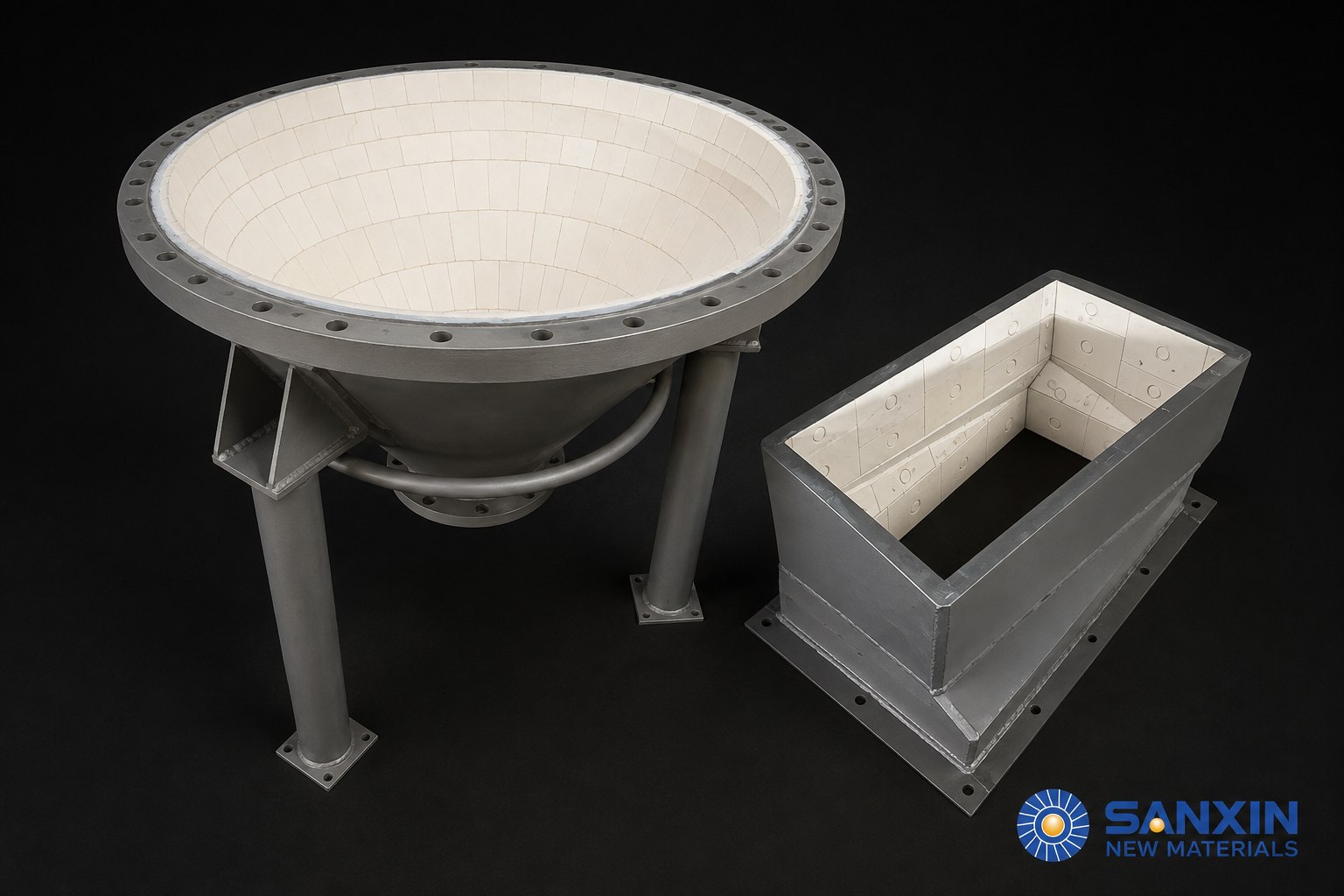
Review powder-bin ceramic lining around wear zones, clearances, joints and outlet geometry while keeping bulk-flow questions within the design scope.
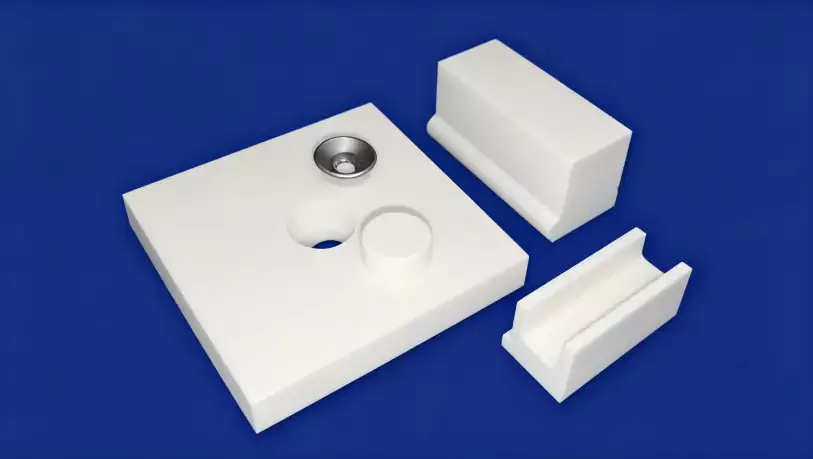
Understand an alumina wear-lining proposal by separating ceramic material, geometry, support and attachment before discussing a plant application.
Plan coal-bin liner inspections using repeatable locations, edge and attachment observations, feed history and clear criteria for technical review.
Investigate detached ceramic liners through the substrate, attachment details, panel support and installation record before selecting a replacement.
Review hot steelworks ceramic applications by separating bulk temperature, thermal cycling, chemical exposure and the limits of the complete assembly.
Map landing zones, sliding surfaces and discharge transitions in steelworks material transfer equipment before reviewing ceramic liner construction.
Connect alumina liner procurement requirements to forming, firing, finishing and inspection without assuming a particular supplier production process.
Compare alumina ceramic grade proposals through verified material data, actual service conditions and complete liner construction before choosing a grade.
Use transfer trajectory, ore variability and repair access to define ceramic liner coverage on mining conveying equipment without assuming impact suitability.
Divide hoppers, chutes and pipework into wear zones before comparing ceramic lining options and planning an observable first installation.
Define practical receiving checks for alumina liners, connecting material identification, dimensional fit and visible condition to the purchase specification.
Map coal transfer loading and liner damage before choosing alumina tiles, then define support, attachment and inspection requirements for the affected zone.
Evaluate a ceramic tile proposal against maintenance access, failure records and replacement tasks instead of assuming that material hardness improves plant availability.
Review product contact surfaces, joints, cleaning and contamination evidence before evaluating an alumina lined feed tube for a battery material process.
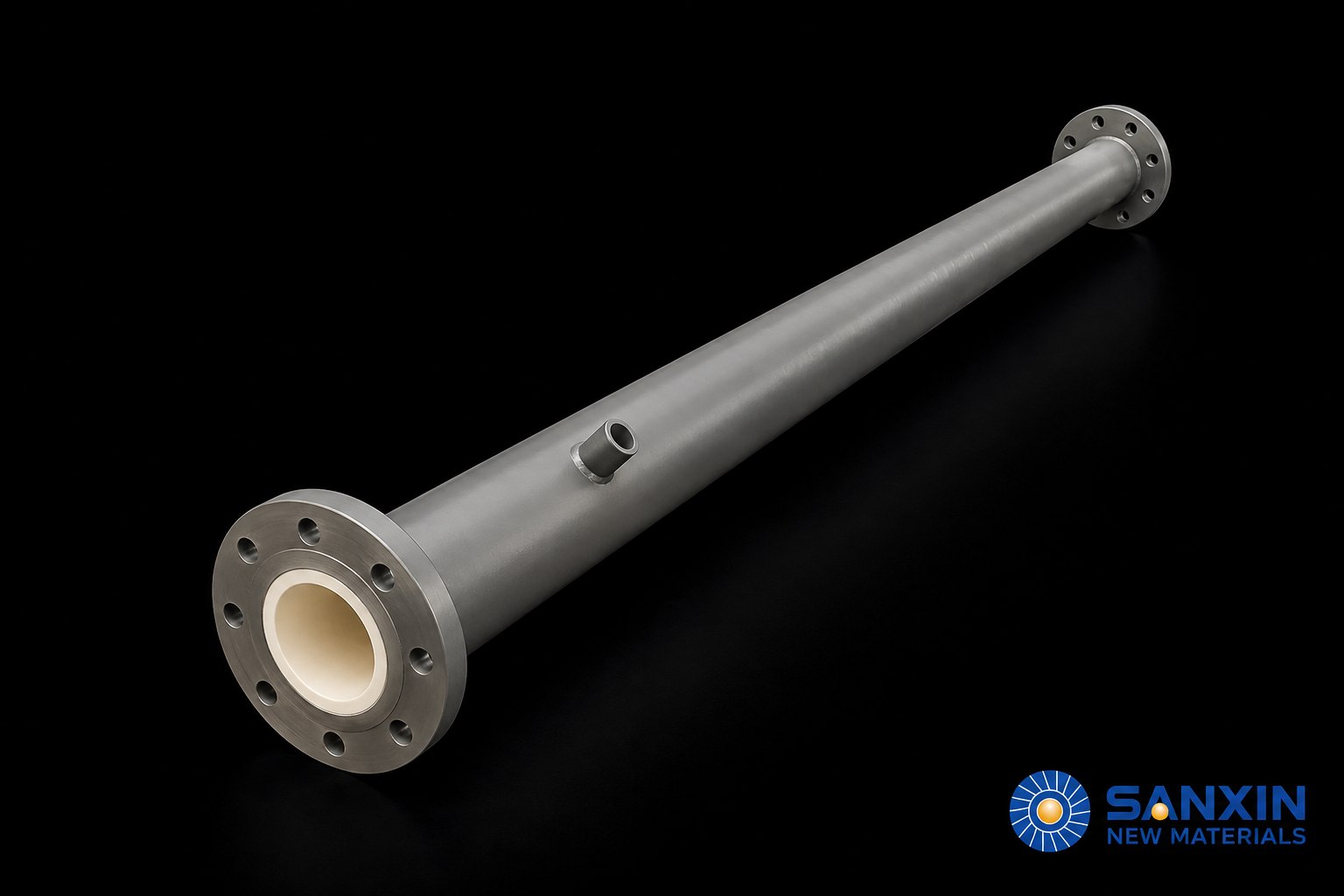
Confirm finished bore, end connections and support constraints before comparing alumina ceramic lining options for an existing abrasive steel pipe route.
Prepare a ceramic-liner inquiry for power-plant pipework by separating ash and coal transport conditions, wear locations and shutdown requirements.
Check tile curvature, support, joint orientation and pipe-end transitions when reviewing an alumina tile lining for abrasive conveying pipework.
Compare ceramic-lined pipe options using finished bore, interfaces, inspection access and operating evidence before accepting a maintenance benefit.
Assess distributor-disc wear, attachment interfaces, clearances and rotor balance before considering alumina ceramic wear parts for sand-making equipment.
Specify a pneumatic conveying pipe lining through its finished bore, transitions, attachment and operating duty, with clear checks for a ceramic option.

Submit your demand,
we will contact you ASAP.

Sanxin New Materials Co., Ltd. focus on producing and selling ceramic beads and parts such as grinding media, blasting beads, bearing ball, structure part, ceramic wear-resistant liners, Nanoparticles Nano Powder


 English
 English
 Russian
 French
 Spanish
 Portuguese
 Arabic